
V. XXV
Capital Punishment Is a Mockery of Justice
Frederick Douglass
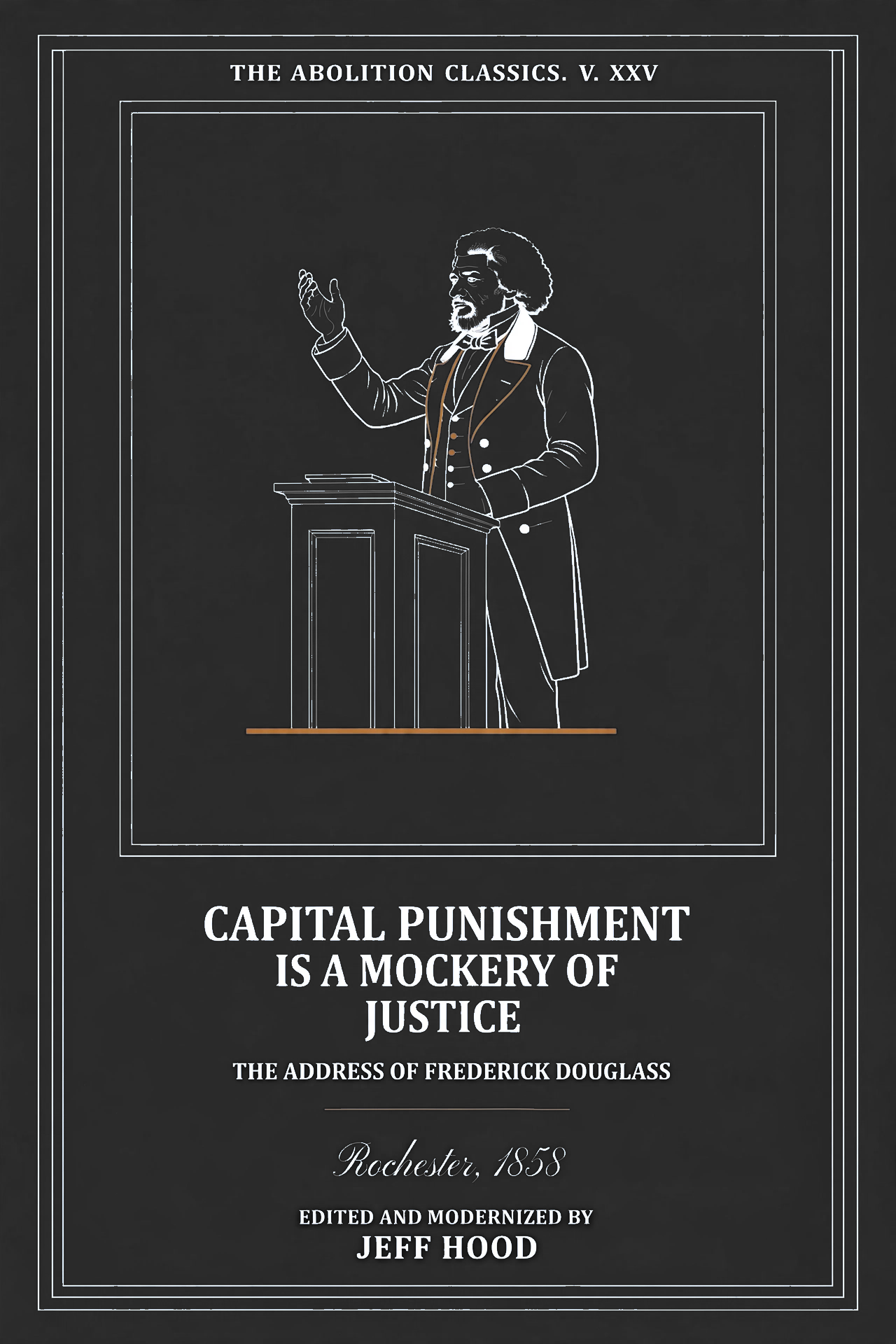
In 1858, Frederick Douglass rose in Rochester to speak against the gallows. He had been a slave; he knew better than any man in the room what it meant for the state to claim ownership of a human life, and he refused to let that claim be laundered through a courtroom and a scaffold.
Douglass's address is not an appeal for sympathy toward the condemned. It is an indictment of a government that calls its own killing justice — a killing carried out over the objection of conscience, in a country that had already proved how easily law could be made to sanction the worst thing a people could do. He speaks of the sacredness of life as a matter of principle rather than sentiment, and turns the language of order and deterrence back on the men who use it. Edited and modernized for contemporary readers, Capital Punishment Is a Mockery of Justice restores Douglass's Rochester address to the abolitionist canon, free to read and download.